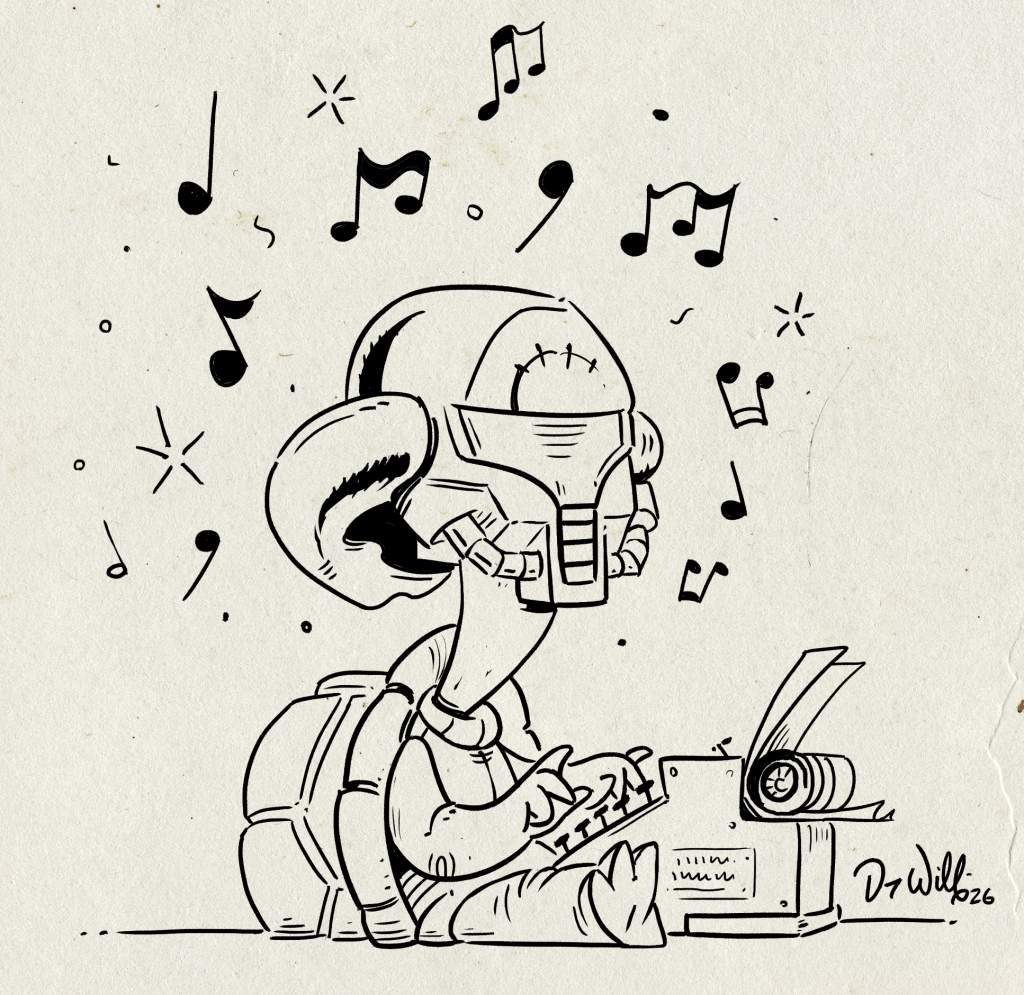
I’ve always had a Metroid-sized vacancy in my video game playing career. Samus and I have kept missing each other.
Nothing could take me away from NBA Jam when Super Metroid first came out in 1994. I was busy in college during the Game Boy Advance releases of Fusion and Zero Mission. I skipped the GameCube and the Prime series because I was briefly too cool for games in college (translation: I started drinking!).
But now I’m back and I’ve made it my mission this year to finally visit the Metroid series. I’m two games in and I already regret all the years that I wasn’t playing Metroid. I’m not saying anything new by praising these games. They are a canonical part of Nintendo’s library. But the quality of their experience is incredible relative to their release dates.
Particularly, the sounds of the games are overwhelming. I play in bed on my Switch Lite and I often turn down the music because the eeriness wakes up my partner.
In Fusion (Game Boy Advance, played on Nintendo Switch Online), I’m warned of the imminent danger in Sector 3 PYR. But I accidentally get lost and miss the gate. The area is momentarily vacant. The only danger is imaginary, created by the eerie sounds of the area and the hollowness of Samus’s failed jumps and Morph Ball Bombs.
In Zero Mission (Game Boy Advance, played on Nintendo Switch Online), space pirates suddenly capture Samus and her suit. Again, I’m left alone without my powers, and only the surrounding sounds to manifest the possible looming threats.
The living and breathing score are a character on its own. It’s an omniscient being that you can’t see on the screen but only feel. The sound creates a tension and urgency that never allows you to feel safe, even long after you turn off the game, turn over, and try to sleep.
Metroid made me think about how writers can use sound on the page to evoke emotions. In writing, I always think about action, giving the characters something to do and think about, but rarely am I conscious of the sounds being generated in a sentence.
There are obvious sounds in writing: knuckles cracking, ice clinking-clanking in a glass, or a creak of a ceiling or floorboard. These are utilitarian actions that can help move a scene forward.
But then there’s sound that means more.
For example, in Mary Robison’s short story Coach:
Coach wearily chopped at the bathwater with the side of his hand.
The hand slices the water and the reader hears the sound of the angry slapping. The aggression of the splash is insinuated in the word “chopped.” The anger has a sound on the page.
Junot Diaz takes this even further in the namesake story of his collection Negocios. In the story, Diaz describes a “… roaring poorly booked plane” and a character “… howling about some monera.” And then my personal favorite:
… with the hum of his new life.
Roaring, howling, and hum are all sounds but also emotions. There’s anger, desire, and smoothness associated with each of those words respectively. The reader hears them and feels them at the same time.
I can’t take credit for any equivalent sounds in my own writing. It’s an unintentional and fortunate accident if you hear things in my writing. But I hope to be more conscious of it moving forward. I’m still a few Metroid games away from fully incorporating music and sound in my writing.
Upcoming Readings and Conversations
Reading and Q&A at Penn State University: 5-6:30 p.m. on Thursday, September 17, 2026.
In Conversation with Nina Mcconigley: 6-7 p.m. on Tuesday, September 29 at Old Firehouse Books in Fort Collins, CO.

Leave a Reply